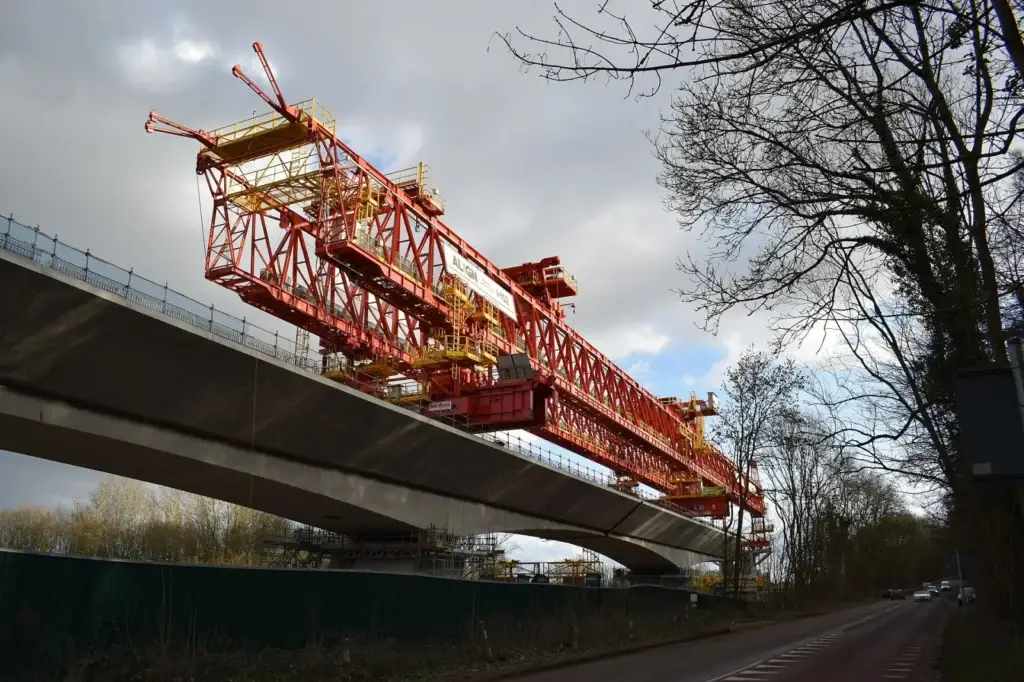
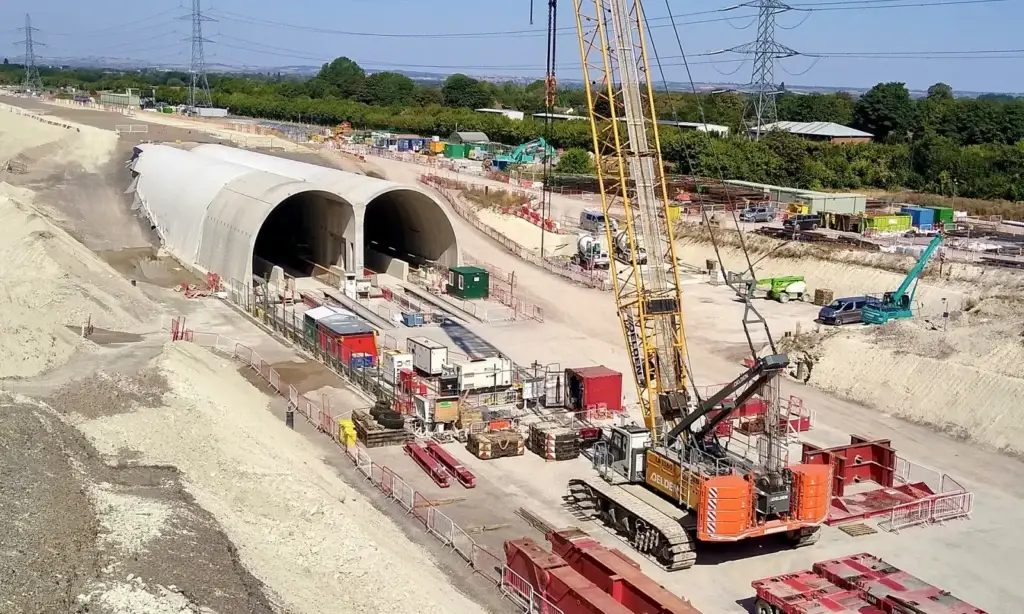
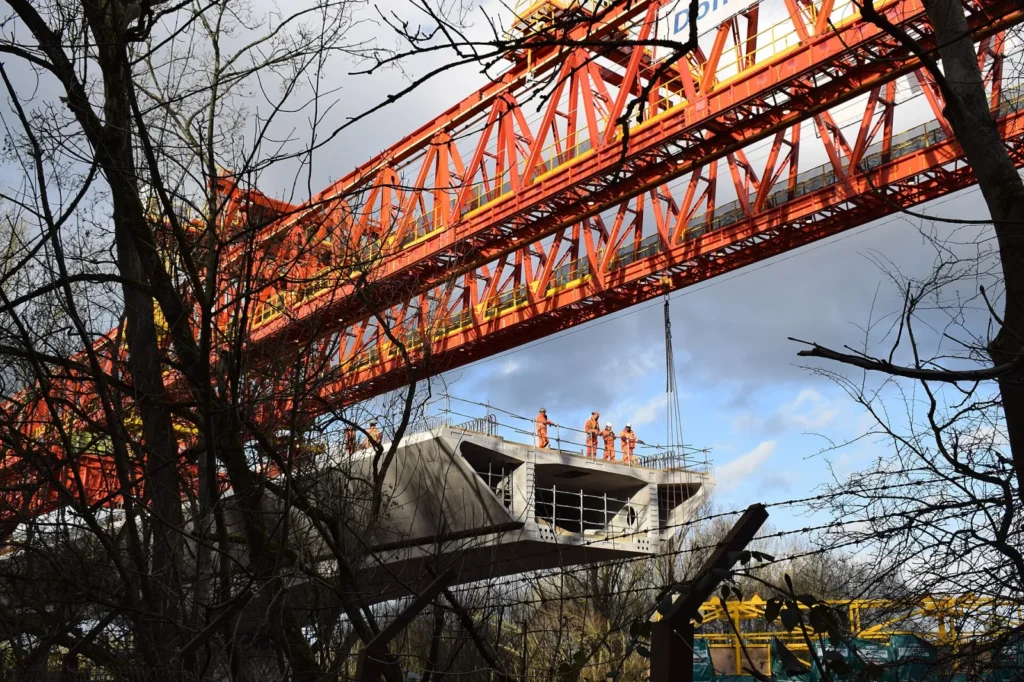
HS2 jobs are some of the most talked-about roles in UK construction, and for good reason. High Speed 2 is one of the largest infrastructure projects in the UK, with viaducts, tunnels, cuttings and stations being built between London and the West Midlands. Around 33,000 people already work on it, and the contractors behind it are still looking for engineers, managers and skilled trades.
How Big Is HS2 and Who Works on It?
According to figures reported by Railway News, around 33,000 people are now working on HS2. The project has supported 2,032 apprenticeship starts by December 2025, beating its original target, and has helped 5,645 previously unemployed people into work against a goal of 5,000.
Most of that work is delivered by large joint ventures. Each one covers a section of the route, from the London tunnels and the Colne Valley viaduct in the south to the earthworks and viaducts of the Midlands. Under each joint venture sits a long supply chain of civils contractors, steel fixing firms, plant hire companies and specialist subcontractors.
That structure matters if you are looking for HS2 jobs. Very few people are employed by HS2 Ltd itself. Most are hired by a main contractor or by one of the many firms in its supply chain.
Which HS2 Jobs Are in Demand Right Now?
The mix of roles changes as each section moves from earthworks to structures and then to railway systems. Right now, contractors are recruiting across a wide range of trades and professions:
- Civil and structural engineers for viaducts, bridges, retaining walls and tunnels.
- Site engineers and section engineers who set out, check quality and keep each work front moving.
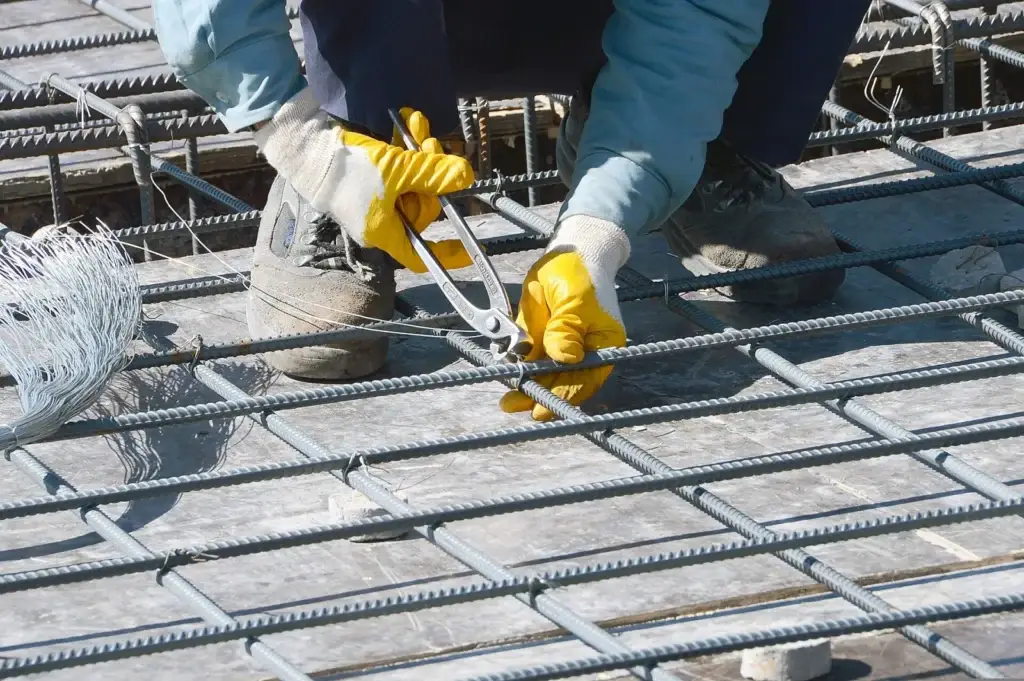
- Steel fixers and formwork carpenters for the huge volume of reinforced concrete on the route.
- Plant operators and groundworkers for earthworks, drainage and haul roads.
- Project managers, planners and commercial staff to control programme and cost.
- Health and safety advisers for some of the busiest construction sites in the UK.
In other words, HS2 jobs are not only for engineers. Skilled trades are just as important, and many people join the project as operatives before moving up.
Civil Engineering Jobs on HS2
For civil engineers, HS2 is a rare chance to work on structures that will last more than a century. Civil engineering jobs on the project include temporary works design, structures, geotechnics, drainage and setting out. Graduates often start as site engineers, while experienced engineers lead sections or packages.
Job openings for civil engineers on HS2 tend to ask for experience on major infrastructure, a good grasp of quality and inspection paperwork, and confidence working with large subcontractor teams. Chartered status with the ICE is a plus, but many contractors also support engineers working towards it.
The skills you build here travel well. Engineers who have worked on HS2 are in demand on road, rail, nuclear and energy schemes for years afterwards.
Steel Fixer Jobs and Other Trades
Every viaduct pier, tunnel portal and retaining wall on HS2 needs reinforcement, which keeps steel fixer jobs in steady supply. Steel fixers are usually asked for a CSCS card, experience reading bar bending schedules and the ability to work safely at height.
Other trades in demand include formwork carpenters, concrete finishers, plant operators, slinger signallers and groundworkers. Many of these roles pay day rates, and the length of the project means work can run for years rather than weeks. You can read more about our groundworker and steel fixer recruitment if this is your trade.
7 Proven Ways Into HS2 Careers
There is no single route into HS2 careers. These are the seven we see work most often:
- Apprenticeships. HS2 contractors have supported more than 2,000 apprentice starts, from civils operatives to degree apprentices.
- Graduate schemes. Main contractors and consultants run graduate programmes for civil engineers, quantity surveyors and planners.
- Experienced engineering roles. Engineers with major infrastructure experience can join at section or package level.
- Skilled trades. Steel fixers, carpenters and plant operators are hired through the supply chain.
- Employment programmes. The project’s jobs programmes have helped more than 5,600 previously unemployed people into work.
- Career changers. People from the Armed Forces, manufacturing and other industries move across with the right training.
- Contract work. Experienced engineers and managers often join on contract during busy phases.
How HS2 Recruitment Works
HS2 recruitment is spread across many employers, which can make it hard to know where to start. Main contractors advertise on their own careers pages, while supply chain firms often hire through specialist agencies or word of mouth.
A few tips make a big difference:
- Lead your CV with the structures, values and contract types you have worked on.
- List your cards and tickets clearly, including CSCS, CPCS or NPORS, SMSTS and any rail qualifications.
- Be realistic about travel. Many sites are in rural areas, so a driving licence helps.
- Expect safety to be part of every interview. HS2 contractors take behavioural safety very seriously.
Before you apply, run your CV through our free CV checker to make sure your experience stands out.
Where HS2 Jobs Are Based
The figures reported by Railway News show that 41% of HS2 apprentices come from the West Midlands and 34% from London and the South East. That reflects where the work is: the London tunnels and stations, the Chilterns and Buckinghamshire, and the busy Midlands sections around Birmingham.
If you live near the route, HS2 jobs can offer years of work close to home. If you are further away, many contractors offer travel or accommodation support for the right people.
How Bernoullis Can Help
Final Thoughts on HS2 Jobs
HS2 is not just a railway. It is one of the biggest training grounds in UK construction, and the skills people gain on it will be needed on major projects for decades. Whether you are a school leaver, a graduate or an experienced engineer, HS2 jobs are worth a serious look in 2026.