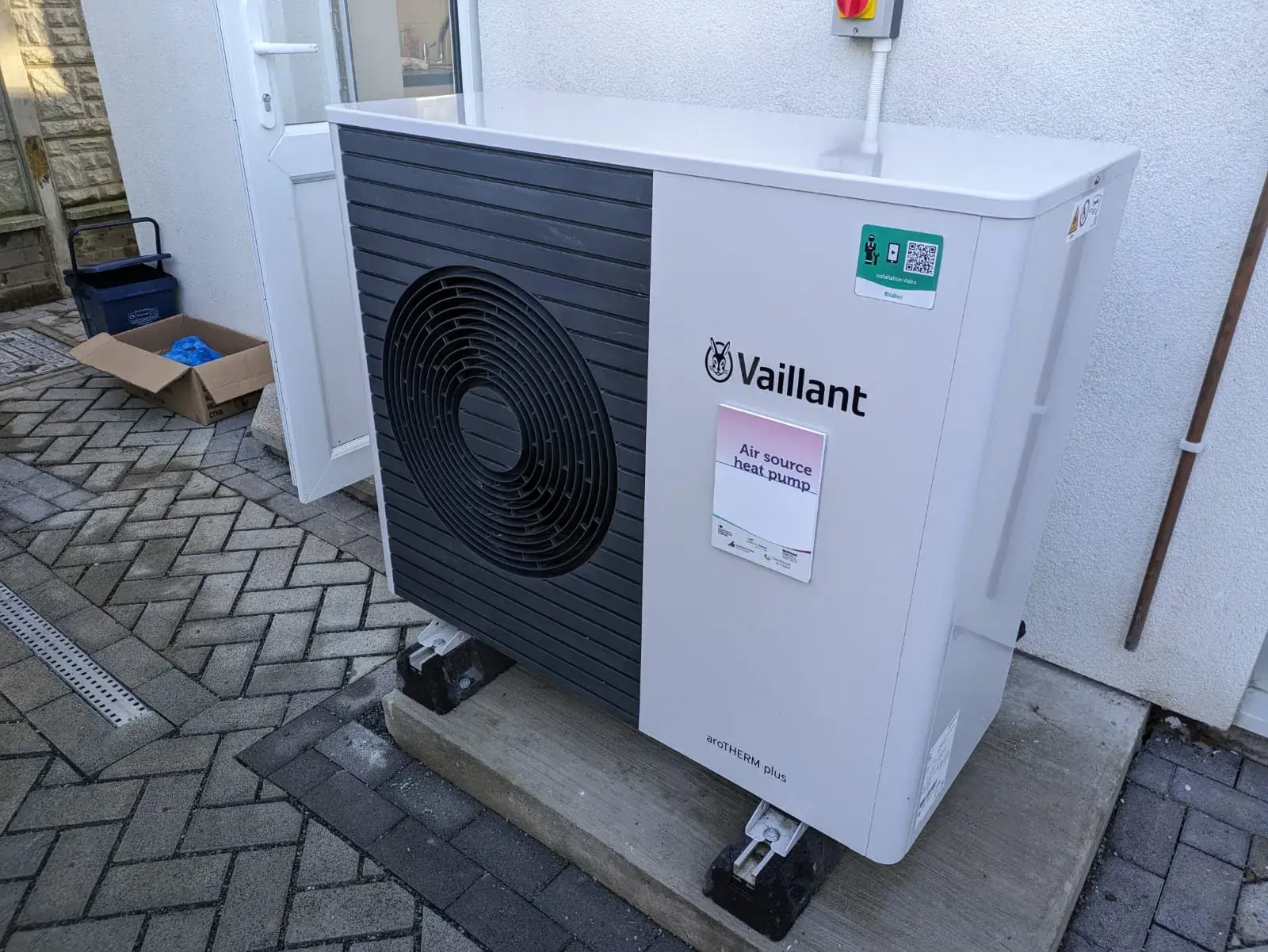
If you are weighing up the heat pump vs gas boiler running cost, the answer depends on two numbers: what you pay for energy, and how efficient each system is. Using Ofgem’s price cap for October to December 2026, we show the simple maths below. The short version is that a well-installed heat pump costs about the same as a gas boiler per unit of heat, and can cost less with the right tariff.
1. Today’s Energy Prices
Ofgem’s price cap from 1 October to 31 December 2026 sets electricity at 26.32p per kWh and gas at 7.97p per kWh for a typical direct debit customer. Standing charges are 54.83p a day for electricity and 29.68p a day for gas (Ofgem). Ofgem quotes the electricity unit rate excluding VAT, as VAT has been removed from household electricity bills for this period. Electricity costs more than three times as much as gas per kWh.
2. Efficiency Changes Everything
A modern gas boiler turns roughly 90% of the gas it burns into heat, so one kWh of heat costs about 7.97p ÷ 0.9, or around 8.9p.
A heat pump moves heat from the outside air instead of making it, so it gives out more heat than the electricity it uses. Its average efficiency over a year is called the SCOP. With a SCOP of 3, one kWh of heat costs about 26.32p ÷ 3, or around 8.8p. These are our own simple estimates, based on the cap rates above and typical efficiency figures.
3. The Heat Pump vs Gas Boiler Running Cost in Numbers
Here is how the heat pump vs gas boiler running cost compares per kWh of heat at today’s cap rates:
- Gas boiler at 90% efficiency: about 8.9p
- Heat pump with a SCOP of 2.5: about 10.5p
- Heat pump with a SCOP of 3: about 8.8p
- Heat pump with a SCOP of 3.5: about 7.5p
So a poor installation can cost more to run than gas, while a good one can cost less. Standing charges also matter. A home that moves fully to a heat pump can close its gas account and stop paying the gas standing charge, which is about £108 a year at today’s cap.
4. What Makes the Most Efficient Air Source Heat Pump?
In practice, the most efficient air source heat pump in any home is not just about the brand or model. Design and installation matter at least as much. The biggest factors are:
- Flow temperature: heat pumps work best at lower temperatures, so radiators may need upgrading.
- Correct sizing: a heat loss calculation makes sure the unit is not too big or too small.
- Good controls: steady, low heating usually works better than short bursts.
- Insulation: the less heat a home loses, the less work the pump has to do.
5. Tariffs Can Tip the Balance
Tariffs can change the heat pump vs gas boiler running cost a lot. Some suppliers offer tariffs designed for heat pump owners, or time-of-use tariffs with cheaper overnight rates. Heating water or pre-heating the home at cheaper times can bring the running cost well below gas. These tariffs need a smart meter.
6. Grants Help With the Upfront Cost
Even the most efficient air source heat pump costs more to buy than a boiler, so upfront cost is the bigger hurdle for most people. In England and Wales the Boiler Upgrade Scheme offers £7,500 towards an air source or ground source heat pump, and eligible off-gas grid homes using oil or LPG can get £9,000 between 21 July 2026 and 31 March 2027 (Energy Saving Trust). You need to use an MCS certified installer.
Who Installs Heat Pumps?
Every heat pump needs a trained engineer to design, fit and commission it, and good engineers are in demand. Many started as gas or plumbing engineers. See our page on heat pump engineer jobs to find out more.
Our View
On the heat pump vs gas boiler running cost alone, the two are now close, and the quality of the installation decides which is cheaper. A well-designed system on a suitable tariff can beat gas, while a poorly designed one will not. If you are an engineer thinking about a move into heat pumps, browse our live vacancies or check your CV with our free CV checker.