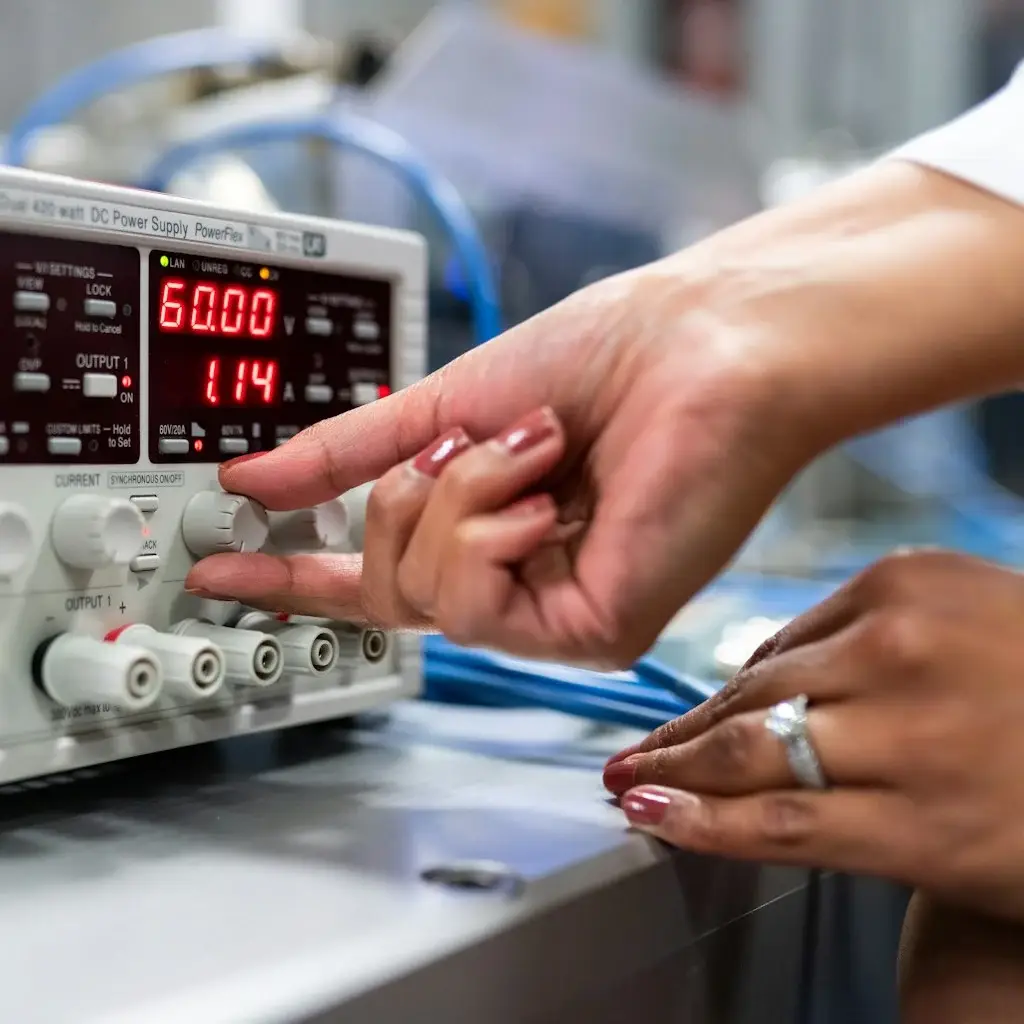
Employment opportunities for electrical engineers have rarely looked this good in the UK. The country is rebuilding its electricity network faster than at any point in a generation, and the people needed to design, build and run it are in short supply. If you work with high voltage, protection or power systems, you are now one of the most wanted people in British engineering.
Why the Grid Engineer Crunch Is Happening Now
National Grid calls the Great Grid Upgrade the largest overhaul of the electricity grid in generations. The reason is simple: the company expects electricity demand to rise by around 50% by 2035 and roughly double by 2050, as heating, transport and industry move from gas and petrol to electricity.
Its RIIO-T3 business plan sets out up to £35bn of investment in the transmission network. That money pays for new overhead lines, upgraded substations, underground tunnels in London and subsea links such as Eastern Green Link, which will carry 2GW of power from Scotland to England.
Every new transmission tower, cable route and substation bay needs engineers to design it, build it, test it and keep it running. The problem is that the UK did not train enough of them during the quiet years, and many experienced engineers are now close to retirement.
How Many Jobs Is the Great Grid Upgrade Creating?
The numbers are large. When the government and the network companies set out their plans to train a clean power workforce, National Grid said its investment would support around 55,000 more jobs by the end of the decade. SSE Transmission pointed to a further 37,000 jobs, and SP Energy Networks planned to double its transmission workforce. All three plans depend on approval from the regulator, Ofgem.
The pay is worth noting too. The same announcement put the average salary in net zero sectors at £43,000, around £5,600 above the national average.
Recruiters feel the pressure every day. Morson ranks power systems and grid infrastructure as the hardest engineering skills to hire in 2026, covering HVDC, protection and control, and commissioning. Skills England data also shows that more than a quarter of UK vacancies are hard to fill because applicants lack the skills employers need. For anyone with the right background, that gap means real choice.

Reading a Vacancy for Electrical Engineer Roles: The Skills in Demand
Open almost any vacancy for electrical engineer roles in the power sector and you will see the same skills come up again and again. These are the ones employers struggle to find:
- Protection and control. Setting, testing and maintaining the relays and schemes that keep faults from spreading across the network.
- Substation design and commissioning. Taking new 132kV, 275kV and 400kV equipment from drawings to energised assets.
- Overhead lines. Designing, refurbishing and inspecting the lines that run between each transmission tower, often in remote locations.
- HVDC and power electronics. Converter stations for subsea and long-distance links are a growing specialism with very few experienced people.
- Power system studies. Load flow, fault level and stability analysis for new connections.
- Authorisation. Senior Authorised Person (SAP) status under the employer’s safety rules is valued almost everywhere.
- Project delivery. Project engineers and project controls staff who understand electrical work are just as scarce as designers.
You do not need every item on this list. Many employers will train a strong electrical engineer from manufacturing, rail or building services in the grid-specific parts of the job.
7 Proven Routes Into Grid Engineering
There is more than one way in, and the best route depends on where you are in your career.
- Direct with a transmission owner. National Grid careers pages, SSEN Transmission and SP Energy Networks all advertise engineering roles for experienced hires and graduates.
- Apprenticeships. National Grid apprenticeships are one of the best-funded routes into the industry, with paid training and a clear path to technician and engineer roles.
- Distribution network operators. Companies such as UK Power Networks, Northern Powergrid and Electricity North West run the lower-voltage networks and are hiring to cope with new connections.
- Contractors and the supply chain. National Grid has announced £624 million of contracts across 78 companies. Those firms need site, design and commissioning engineers too.
- Renewables developers. Wind, solar and battery projects all need a grid connection, so renewable energy jobs often have an electrical engineer at their centre.
- Transfers from other sectors. Engineers from rail electrification, data centres, heavy industry and the Armed Forces move across successfully every year.
- Contract and interim work. Experienced engineers can earn strong day rates on short projects, especially in commissioning and protection.

National Grid Careers and Apprenticeships: What to Know Before You Apply
National Grid careers come in three broad groups: apprenticeships, graduate programmes and experienced hires. Each one has its own intake and timetable.
National Grid apprenticeships recruit for set start dates, and the 2026 intake includes roles such as Electricity Network Planning Engineer Higher Apprentice in Warwick, substation apprenticeships in South London and the North East, and overhead lines apprenticeships in places like Preston and Bramford. Advanced apprenticeships suit school leavers, while higher apprenticeships combine work with study towards a degree-level qualification.
For experienced engineers, a few tips make a big difference:
- Lead your CV with voltage levels, equipment types and the safety rules you are authorised under.
- Show commissioning and outage work clearly, including the size of the projects.
- Be open about travel. Many grid roles cover a region rather than a single site.
- Expect a structured interview with competency questions about safety and teamwork.
Renewable Energy Jobs Need Grid Engineers Too
It is easy to think of renewable energy jobs as roles on wind farms or solar sites. In practice, a large share of the engineering work sits at the point where those projects meet the network.
Each offshore wind farm needs an onshore substation, export cables and protection schemes. Battery storage sites need grid compliance studies and careful commissioning. Developers compete for the same pool of electrical engineers as National Grid and the network operators, which keeps steady pressure on pay.
If you want to work in clean energy but do not want a career offshore, grid connection engineering is one of the most stable places to be.
How Bernoullis Can Help
Final Thoughts on Employment Opportunities for Electrical Engineers
The grid engineer crunch is not a short-term spike. The investment is planned across the rest of this decade and beyond, and demand for electricity keeps climbing. That makes the employment opportunities for electrical engineers in power some of the most secure in UK engineering.
Whether you are a school leaver looking at apprenticeships, a graduate weighing up your first job or an experienced engineer ready for a change, now is a very good time to look at the grid.