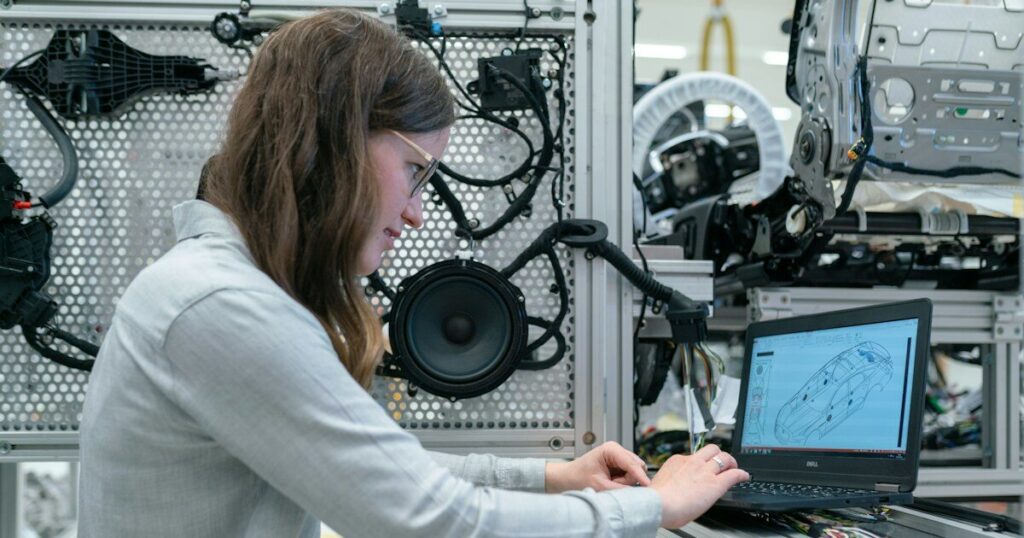
Robotics engineer jobs are among the fastest-changing roles in UK engineering. In just a couple of years, robots have gone from following rigid, hand-coded routines to learning tasks from demonstrations, understanding plain-English instructions and adapting to objects they have never seen. That shift is creating new opportunities for engineers who combine mechanical, electrical and software skills. Whether you are a graduate, an automation engineer looking to step up or a career changer, this guide covers what robotics engineers do, the main job types, the eight skills employers want most and how to get hired.
Why Robotics Engineer Jobs Are Growing in the UK
Several forces are driving demand for robotics engineer jobs across the country.
Labour shortages. Manufacturing, logistics, food production and agriculture all struggle to fill roles. Automation helps them keep output up.
Reshoring and resilience. UK manufacturers are bringing production closer to home and holding more stock. Automated cells make that affordable.
Smarter, more flexible robots. New vision-language-action models let robots read a scene, follow an instruction and act on it, so robots can be redeployed between tasks faster.
Cheaper collaborative robots. Cobots now work safely alongside people, so smaller firms can automate without full robot cages.
Growth in new sectors. Warehousing, agri-tech, healthcare, nuclear decommissioning, offshore inspection and defence all need robotics expertise.
A robotics engineer designs, builds, programs, tests and maintains robotic systems. Depending on the role, a typical week might include:
Designing or specifying a robot cell, including grippers, sensors and guarding
Programming robot paths and logic, then simulating them before going live
Integrating robots with PLCs, conveyors, vision systems and factory software
Commissioning systems on site and training operators
Fault-finding and improving cycle times, reliability and safety
Writing risk assessments and technical documentation
Types of Robotics Engineer Jobs
The label covers a wide range of roles. Knowing the differences helps you target the right robotics engineer jobs for your background.
Job title
Focus
Typical background
Robotics software engineer
Perception, motion planning, AI and ROS 2
Computer science, robotics, maths
Robot programmer or applications engineer
Programming industrial robots for specific tasks
Mechatronics, automation
Controls and automation engineer
PLCs, HMIs, robot integration and safety systems
Electrical, controls
Mechatronics design engineer
Mechanical design of robots, grippers and end effectors
Mechanical, mechatronics
Machine vision engineer
Cameras, 3D sensing and inspection
Electronics, software
Robotics field service engineer
Installation, commissioning and maintenance
Electrical or mechanical apprenticeship
8 Essential Skills for Robotics Engineer Jobs
1. ROS 2 (Robot Operating System)
ROS 2 is the standard framework for research and a fast-growing number of commercial robots. Knowing nodes, topics, services, navigation and MoveIt makes your CV stand out instantly.
2. Python and C++
Python is used for prototyping, AI and testing. C++ is used for real-time, performance-critical code. Most robotics software roles expect both, and embedded software skills are a bonus.
3. Kinematics, dynamics and control
You need to understand how robot arms and mobile robots move: forward and inverse kinematics, PID control, trajectory planning and sensor fusion.
4. PLCs and industrial automation
Most factory robots sit inside a wider automated line. Experience with Siemens, Allen-Bradley or similar PLCs, plus robot brands such as ABB, FANUC, KUKA, Yaskawa or Universal Robots, is highly valued. Our automation engineer skills guide covers this in more depth.
5. Machine vision and 3D perception
Robots increasingly rely on cameras and depth sensors to find parts, check quality and avoid collisions. Experience with OpenCV, point clouds and calibration is a strong advantage.
6. Machine learning for robotics
The biggest trend in robotics research is robots that learn. Imitation learning, reinforcement learning and vision-language-action models are moving from labs into products. Even a basic understanding puts you ahead of most applicants for robotics engineer jobs.
7. Safety standards and regulation
Employers need engineers who understand ISO 10218 for industrial robots, ISO/TS 15066 for collaborative robots, PUWER and the Supply of Machinery (Safety) Regulations 2008. Safety knowledge is often the deciding factor between candidates.
8. Simulation and digital twins
Tools such as Gazebo, NVIDIA Isaac Sim, RoboDK and vendor simulators let you test robot cells virtually before installation. Simulation skills cut commissioning time and risk.
How to Become a Robotics Engineer in the UK
There is more than one route into robotics engineer jobs.
Degree. Robotics, mechatronics, mechanical, electrical or computer science degrees are common entry points. A master’s helps for research-heavy software roles.
Apprenticeship. Level 3 engineering technician and Level 6 degree apprenticeships let you earn while you learn, often with automation or robotics employers.
Career change. Electricians, maintenance technicians and software developers can move across by adding robot programming, PLC or ROS 2 skills.
Professional registration. Working towards EngTech, IEng or CEng through the IET or IMechE builds credibility.
Where to Find Robotics Engineer Jobs
Robotics roles cluster around manufacturing and research hubs, including the West Midlands, the North West, Bristol and Bath, Cambridge, Oxford and Edinburgh. Logistics, food production and agri-tech roles are spread more widely. Field service roles often cover a large region, so a driving licence is usually essential.
Build a portfolio. A GitHub repo with a ROS 2 project, a simulated robot cell or a vision project proves your skills.
Quantify results. “Reduced cycle time by 12%” beats “improved cycle time”.
Show safety awareness. Mention risk assessments and standards you have worked to.
Tailor your CV. Match keywords from the job advert, such as robot brands, PLCs and software. Try the Bernoullis CV checker to see how well your CV matches.
Final Thoughts on Robotics Engineer Jobs
Robotics engineer jobs sit at the meeting point of mechanical engineering, electronics, software and AI. As robots become smarter and easier to deploy, UK employers need engineers who can design, program, integrate and keep them safe. Build skills in ROS 2, automation, vision, safety and machine learning, and you will be in a strong position.
What qualifications do I need for robotics engineer jobs?
Most roles ask for a degree in robotics, mechatronics, mechanical, electrical or computer engineering, or an engineering apprenticeship. Practical experience with robot programming, PLCs or ROS 2 can matter as much as formal qualifications.
Are robotics engineer jobs in demand in the UK?
Yes. Labour shortages, reshoring and more flexible AI-driven robots are increasing demand across manufacturing, logistics, agri-tech, healthcare and nuclear.
How much do robotics engineers earn in the UK?
Pay varies widely by sector, location, seniority and specialism. Software and controls specialists with AI or safety expertise usually command the highest rates. Check live listings for current figures in your area.
Can I become a robotics engineer without a degree?
Yes. Apprenticeships and career change routes from electrical, maintenance or software backgrounds are common, especially for robot programming and field service roles.
Keep reading
More Engineering News and Career Guides
Next steps
Ready for Your Next Engineering Move?
Browse live engineering vacancies, send us your CV or tell us about a role you need to fill. Our engineers recruit engineers.
Submission Received! A consultant will be in touch about your vacancy within 24 hours.
Submit Your CV / Resume
Please fill in the form below.
Success!
Submission Received! Our talent team will review your CV within 24 hours.
Your privacy
We use essential cookies to run this website. With your permission we’d also like to use Google Analytics cookies to understand how the site is used, so we can improve it. You can change your mind at any time. Read our Privacy Policy.